


What Is a Rental LED Display?
A rental LED display is a temporary LED video wall made from lightweight LED cabinets that connect mechanically and electronically into a larger screen. Unlike fixed LED displays, rental LED screens are designed for repeated installation, dismantling, transportation, and reconfiguration. A rental panel may move from a trade show to a concert, then into a broadcast studio or corporate ballroom, so cabinet structure, locks, handles, corner protection, flight cases, power distribution, and maintenance access all matter.
When Should You Use a Rental LED Display?
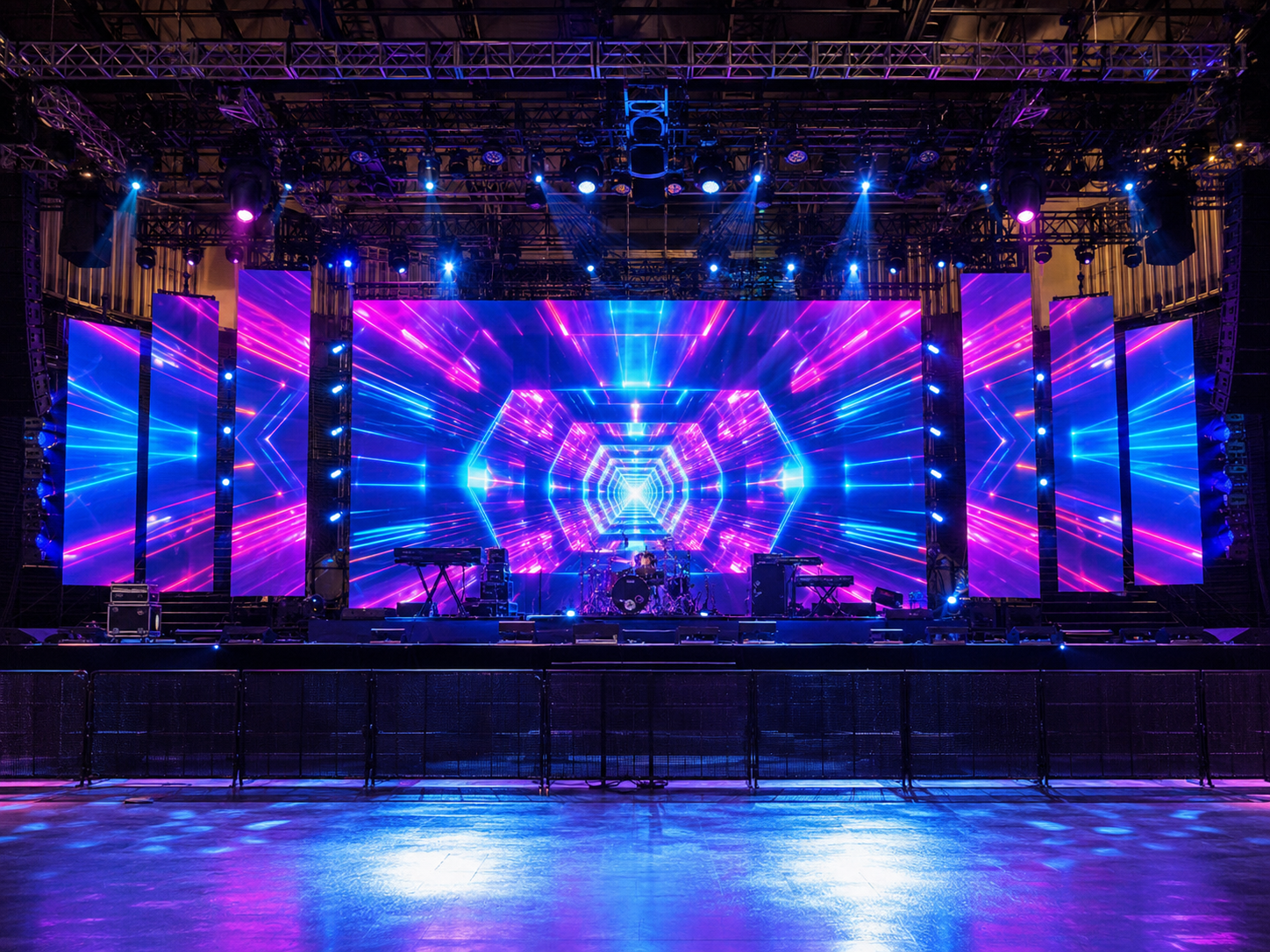
Use a rental LED display when an event needs a large, bright, seamless image for a limited period of time. Compared with projection, LED screens usually perform better in bright rooms, outdoor settings, and stages with strong lighting. They also give designers more freedom because panels can be stacked, flown, curved, or arranged into creative structures.
Rental LED displays are especially useful for touring concerts, roadshows, exhibition booths, seasonal campaigns, and multi-city events where the screen must be packed and rebuilt quickly. Buying makes sense for AV rental companies, venues, and agencies that use LED displays frequently. Renting may be better for a one-time event. In either case, ask the same questions: What is the viewing distance? Is the screen indoor or outdoor? Will cameras film it? How fast is the load-in? Who handles support if a module fails?
Indoor vs Outdoor Rental LED Displays
Indoor rental LED displays usually prioritize close viewing, smooth image quality, quiet operation, and refined cabinet alignment. They are often used in ballrooms, studios, corporate events, churches, retail launches, and exhibition halls. Outdoor rental LED displays must handle a tougher environment, including daylight visibility, rain, dust, wind exposure, and long event days at festivals, sports events, public celebrations, city stages, and touring concerts.
For outdoor specifications, do not accept the word "waterproof" without checking the actual rating. IP protection is based on a defined enclosure standard, and the first digit relates to solids while the second digit relates to water. If you are comparing outdoor products, review the basics of IP65 ratings for outdoor LED walls before approving a screen for rain-prone or dusty event sites.
How Do You Choose Pixel Pitch?
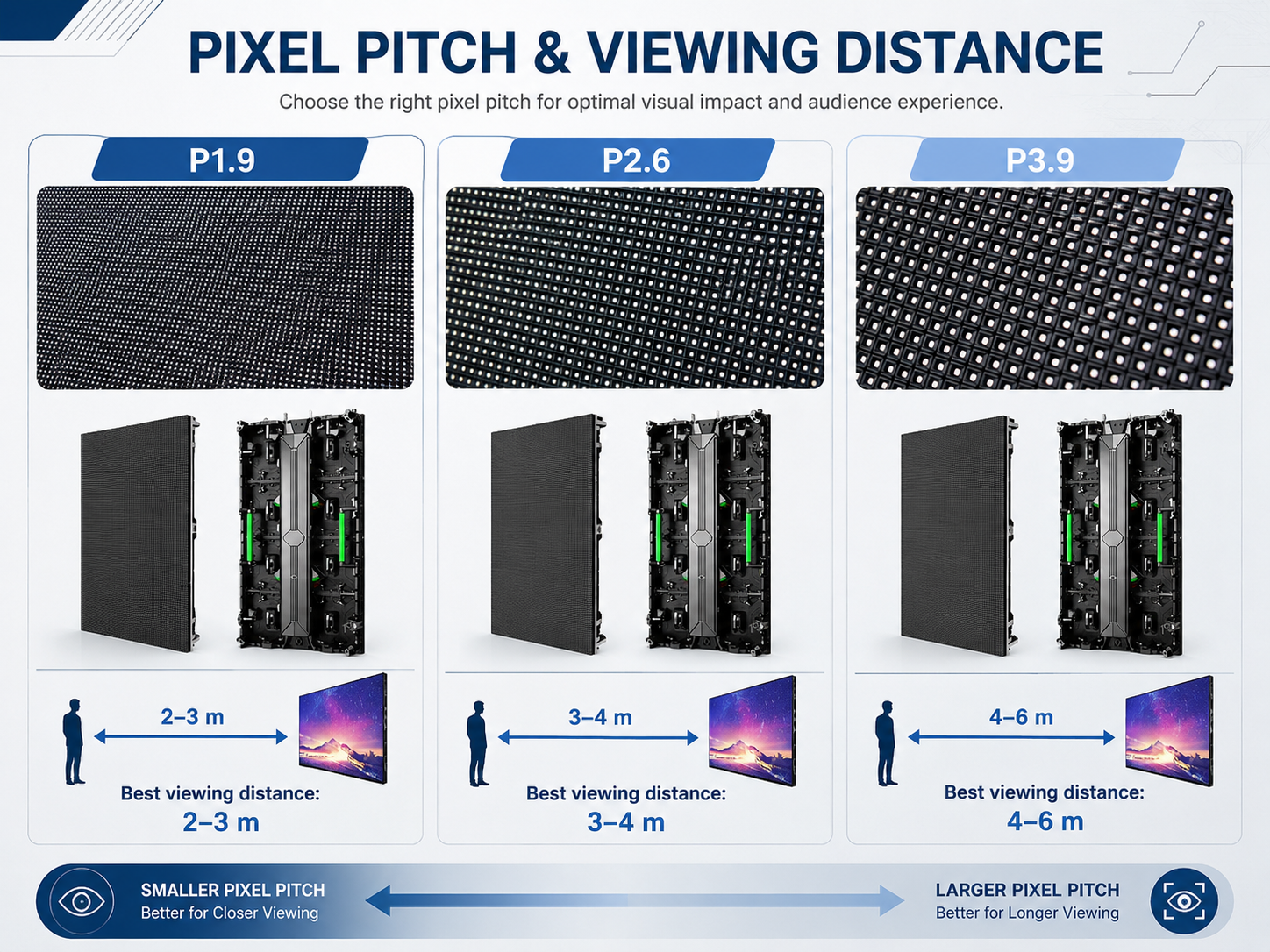
Pixel pitch is the distance between the centers of two adjacent pixels, usually measured in millimeters. A smaller pixel pitch creates a sharper image at shorter viewing distances, but it also increases cost. A larger pixel pitch is more economical and can still look excellent when the audience is farther away.
For close indoor events, fine-pitch options such as 1.5 mm, 1.9 mm, or 2.6 mm can make a major difference. For medium-distance indoor and outdoor events, 2.9 mm and 3.9 mm are common choices because they balance clarity, cost, and installation flexibility. A practical rule is to match pixel pitch to the nearest expected viewer, not the farthest viewer. If guests will take photos in front of the wall or stand near the booth, a smaller pitch may be worth the investment.
What Specifications Matter Most?
Brightness, refresh rate, cabinet weight, service method, flatness, contrast, and color consistency are all important. Indoor screens may work well at lower brightness, while outdoor stages often need much higher output to remain visible in daylight. Refresh rate matters when cameras capture the screen because a low refresh rate can create scan lines, flicker, or banding in video recordings.
Cabinet weight affects labor, rigging, transportation, and safety planning. A lighter panel can reduce installation pressure, but it still needs a strong frame and reliable locking system. Service access also matters: front maintenance is useful when the rear of the screen is blocked, while rear maintenance may be convenient for touring and staging setups. Flatness and alignment are equally important because small gaps or uneven panels can make a premium event look unfinished.
Which Esdlumen Rental LED Display Series Fits Different Events?
For close-viewing indoor stages, premium live productions, corporate launches, and camera-facing events, the Pilot Pro fine-pitch rental LED display is a strong match. It includes fine-pitch options and rental-focused features for fast setup, creative splicing, front or rear maintenance, and high-end visual performance. This type of product is best when image detail and stage polish carry more weight than the lowest possible price.
For rental companies that need one flexible inventory for many job types, the Dazzle IV indoor and outdoor rental LED screen is more of a practical workhorse. It is designed around fast installation, universal components, easy maintenance, and multi-scenario use. That makes it useful for exhibitions, concerts, conferences, touring events, and temporary LED video walls where the same panels may be used in different environments.
For festivals, outdoor stages, concerts, and events that need high brightness and stronger weather protection, the Shine Pro outdoor rental LED display is the more direct choice. It is built for outdoor rental use, with IP65 protection, high-brightness options, fast installation features, and wind-resistant frame options for more demanding stage environments.
If touring weight and fast load-in are major concerns, E-Sapphire lightweight rental LED panels are worth considering. For creative stages, curved screens, rings, waves, cylinders, or 90-degree corners, Esdlumen's E-Swan and E-Corner products help designers move beyond a flat rectangle while still using rental-ready LED technology.What Real Rental LED Projects Show
Real projects are one of the best ways to judge whether a rental LED display is more than a catalog product. In a Pilot Pro live event deployment in the United States, the project used 106 square meters of Pilot Pro 2.6 mm panels for live performances and stage events, with the case emphasizing fast setup, fine-pitch image quality, and stable operation.
Other Esdlumen rental and staging cases show the same pattern in different environments: a 220-square-meter Pilot Pro LED surface at CranCa Live Fest in Spain, Dazzle IV at the North West 200 motorsport event in Northern Ireland, and Shine Pro for a major concert in Spain with more than 500 square meters of LED display. These examples connect product features to real event pressure, from close-viewing image quality to fast maintenance and outdoor stability.
How Much Planning Is Needed Before Installation?
A rental LED display should be planned before the crew arrives on site. Start with screen size, aspect ratio, viewing distance, content format, rigging method, power load, signal path, backup equipment, and access for service. If the screen will be flown, the rigging structure and load capacity must be reviewed by qualified professionals. If the screen will be stacked, the ground support system must be stable and appropriate for the site.
Content planning is just as important. A beautiful LED wall can look poor if the content is the wrong resolution, too dark, too bright, or not designed for the screen shape. Before the event, confirm the pixel map, media server output, processor settings, camera requirements, refresh rate, spare modules, power supplies, cables, tools, and technician responsibilities. Events leave little room for delay, so the service plan should be ready before the first panel is installed.
How Do You Compare Rental LED Display Suppliers?
Do not compare suppliers by price alone. A low quote can become expensive if the panels are heavy, slow to install, difficult to repair, inconsistent in color, or unsupported after delivery. Ask for product specifications, case studies, warranty terms, service process, spare-part availability, installation guidance, and technical support options.
Esdlumen is a useful reference point because the brand combines product documentation with visible project experience and service infrastructure. The company was established in 2007 as a brand under LianTronics and presents a 300+ person R&D team, an 80,000-square-meter manufacturing base, 400+ patents, 200+ industry awards, and project experience across more than 200 countries. That does not mean every project needs the most advanced product. It means the supplier should be able to explain why one screen is the right fit for your venue, audience, schedule, content, and maintenance plan.
Common Mistakes to Avoid
The first mistake is choosing only by pixel pitch. Pixel pitch is important, but it is not the whole screen. A 2.6 mm panel with poor alignment, weak locks, or limited service access can perform worse than a better-built 2.9 mm panel in a real rental environment.
The second mistake is ignoring installation time. Faster locks, lighter cabinets, simple power and signal layouts, and universal spare parts can reduce labor pressure across many events. The third mistake is treating indoor and outdoor screens as interchangeable. The fourth is forgetting the camera. If the screen will appear in a livestream, broadcast, or social media video, refresh rate, color performance, moire control, and camera testing should be part of the decision.


